↓
 

Tampa Land Surveying

Local Land Surveyors in Tampa, FL

Header image showing Tampa skyline for Tampa Land Surveying website
Tampa Land Surveying
(813) 336-7736
Tampa Land Surveying
  • Home
  • Home
  • ALTA Survey
  • Boundary Surveying
  • Construction Survey
  • Drone LiDAR Mapping
  • Elevation Certificate
  • Land Surveying
  • Topographic Survey
  • About Us
  • Blog
  • Contact Us
Home - Page 2 << 1 2 3 4 … 8 9 >>

Post navigation

← Older posts
Newer posts →

What Is Survey Mapping and Why Does Your Property Need It?

Tampa Land Surveying Posted on June 10, 2026 by TampaSurveyorJune 5, 2026
Surveyor using GPS equipment for survey mapping to collect land measurements and create accurate property and topographic maps

Developers lose money on bad assumptions. A parcel looks clean on paper, the price is right, and the timeline seems workable. Then construction starts, and something turns up that wasn’t on any document: an unrecorded easement, a drainage path cutting through the build zone, or lot dimensions that don’t match the deed.

Survey mapping is how you find those problems before they become your problems.

This article explains what survey mapping is, what it produces, and why developers who skip it at the start of a project tend to pay for it later in ways that are much harder to budget for.

What Is Survey Mapping?

Survey mapping is the process of collecting, measuring, and recording spatial data about a property and turning that data into an accurate, scaled drawing.

A licensed surveyor collects field measurements using professional equipment. That data gets processed and drawn into a map that shows the physical and legal features of the land: boundaries, elevations, structures, utilities, easements, flood zones, and other site conditions.

The output is a document that engineers, architects, planners, and attorneys can all work from. Unlike a satellite image or an online parcel map, a survey map carries legal weight. It can be sealed, recorded, and used in court.

What Survey Mapping Shows That Other Documents Don’t

County parcel maps are useful for general reference. They’re not accurate enough for development decisions.

A survey map goes much further. Depending on the type of survey, the survey data can show: 

  • Exact property boundaries with measured dimensions
  • Corner monuments and their condition in the field
  • Easements and rights-of-way crossing the parcel
  • Existing structures and their distance from property lines
  • Elevation contours and drainage patterns
  • Encroachments from neighboring properties
  • Flood zone designations tied to actual site elevations
  • Utility lines, both above ground and recorded underground

For a developer, each of those items affects decisions. Where you can build. How high you need to build. What the site needs before construction can start. What disclosures are required at sale.

None of that information is reliably available from a deed or a county map alone.

Types of Survey Maps Used in Development

Survey mapping covers several distinct products. Each one serves a different stage or purpose in a development project.

Boundary Survey Map

This confirms the legal edges of a parcel. It locates corner monuments, verifies dimensions against recorded deeds, and identifies any encroachments or gaps. This is usually the first survey a developer orders on a new acquisition.

Topographic Survey Map

This records the elevation and terrain of a site. Contour lines show high and low points across the property. Engineers use this to design grading, drainage, and foundation placement. Without it, site design is based on guesswork.

Subdivision Plat Map

When a parcel gets divided into multiple lots, a subdivision plat is the document that creates the new legal lots. It gets recorded with the county and becomes the official record for all future transactions on those lots.

ALTA/NSPS Survey Map

This is the highest standard in commercial real estate. It combines boundary, improvement, and easement data into one document that meets national standards set by the American Land Title Association. Lenders and title companies require it for most commercial transactions.

Why Survey Mapping Matters at Every Stage of a Project

Most developers think of survey mapping as a one-time step before construction. The reality is that different types of survey maps serve different stages, and getting the right one at the right time prevents specific, predictable problems.

Before Acquisition

A boundary survey before purchase confirms you’re buying what’s being sold. Lot dimensions on a listing can be wrong. Encroachments from neighboring structures may not appear in any title document. A survey map done before closing gives you verified data to negotiate from or walk away on.

During Design and Permitting

A topographic survey map gives your engineer the elevation data needed to design the site correctly. Permitting offices in most jurisdictions require survey data to verify setback compliance and grading plans. Submitting without it causes delays.

During Construction

Construction staking uses the survey map to position structures accurately on the ground. Without it, contractors work from estimates. That creates risk on setbacks, utility clearances, and lot coverage calculations.

At Sale or Financing

Lenders and title companies review survey maps before approving financing or issuing title insurance. A property without a current survey, or with a survey that doesn’t match current conditions, can stall or kill a closing.

Common Mistakes Developers Make With Survey Mapping

Skipping the topographic survey to save money is the most common one. The cost of re-grading a site after discovering drainage problems during construction is almost always higher than the survey would have been.

Ordering the wrong survey type is another. A boundary survey tells you where the property lines are. It doesn’t tell you what the land does between those lines. If your project requires elevation data, drainage design, or utility coordination, a boundary survey alone won’t cover it.

Waiting too long is a third. A survey ordered after design is already underway means any problems discovered have to be worked around instead of designed for. That’s more expensive and slower.

What to Expect From the Survey Mapping Process

A licensed surveyor visits the site, collects field measurements, and researches relevant records including recorded deeds, prior surveys, and county plat maps. That data gets compiled into the survey drawing.

The final product is reviewed, signed, and sealed by the licensed surveyor. That seal is what gives the document legal standing for use with lenders, permitting offices, and courts.

Turnaround time varies based on the type of survey, the size of the parcel, and how complex the records research turns out to be. A straightforward residential boundary survey on a recorded subdivision lot moves faster than an ALTA on a commercial parcel with multiple easements and a disputed boundary.

Plan for the survey early. It’s rarely the longest step in a project, but when it’s ordered late, it becomes the thing everything else waits on.

Frequently Asked Questions

Is survey mapping the same as a property appraisal?

No. An appraisal estimates the market value of a property. Survey mapping records its physical and legal characteristics. They serve different purposes and are done by different licensed professionals.

Can I use a survey map from a previous owner?

Sometimes. If the map was done recently and the property hasn’t changed, it may still be valid for some purposes. Lenders and title companies often set their own requirements on how current a survey must be. A licensed surveyor can review an existing map and advise whether it meets your current needs.

Does survey mapping cover underground utilities?

Recorded utility easements typically appear on a survey map. The physical location of underground lines is a separate process called utility locating, which is usually coordinated before any excavation work begins.

How is a survey map different from a GIS map?

GIS maps aggregate data from multiple sources and are useful for planning and research. They’re not field-verified and don’t carry legal weight. A survey map is based on direct field measurements by a licensed surveyor and can be used in legal and regulatory proceedings.

What happens if a survey map shows a problem with the property?

That depends on the problem. An encroachment from a neighbor can sometimes be resolved through a recorded agreement or a boundary line adjustment. An easement that crosses the build zone may require a redesign. A flood zone designation that affects buildable area may support a LOMA request if the elevation data qualifies. A survey map identifies the issue. What comes next depends on the specific finding.

Posted in land surveying | Tagged Land Surveying, land surveyor, survey mapping, survey mapping florida

5 Questions to Ask a Licensed Surveyor Before You Sign

Tampa Land Surveying Posted on June 9, 2026 by TampaSurveyorJune 5, 2026
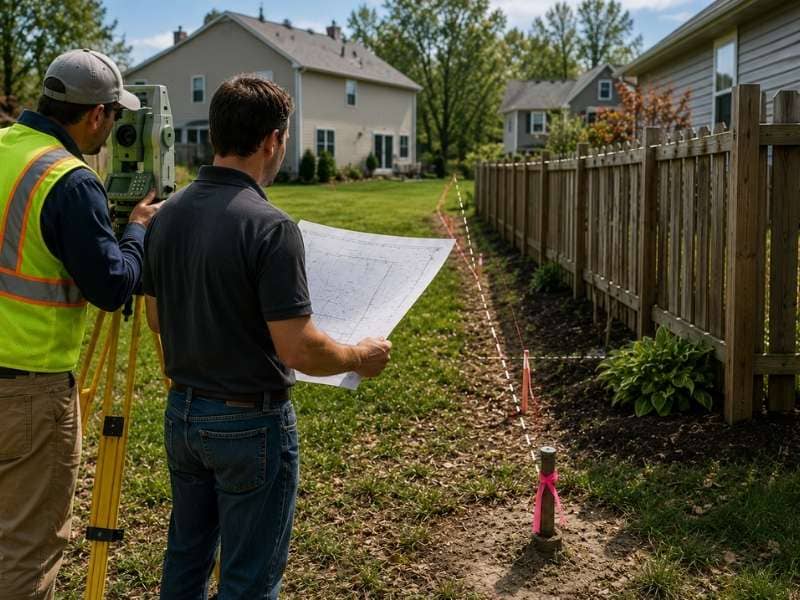
Property owner reviewing plans with a licensed surveyor before hiring survey services for a residential development project

Most developers spend weeks reviewing contracts, zoning codes, and title reports before closing on a parcel. Then they hire a surveyor in two phone calls and move on.

That’s a mistake.

The surveyor’s work affects every decision that follows. Bad data from a rushed or underqualified survey can delay permits, create boundary disputes, and cost far more to fix than the survey itself ever cost. Asking the right questions before you hire a licensed surveyor takes 15 minutes. Fixing a bad survey can take months.

This article covers the five questions every developer should ask before signing any survey agreement.

Why Vetting a Licensed Surveyor Actually Matters

A license means the state has verified minimum qualifications. It doesn’t mean every licensed surveyor is the right fit for your project.

Survey work varies by property type. A rural acreage subdivision requires different experience than a waterfront commercial parcel in a mapped flood zone. Someone who mostly handles residential lot surveys may not have the background to handle a complex ALTA with multiple easements and a tight closing deadline.

The five questions below help you figure out who you’re actually hiring, before any work begins.

Question 1: Are You Currently Licensed in This State?

This should be the first question, and the answer should be immediate and verifiable.

Licensed surveyors carry a state-issued license number. In most states, you can look that number up online through the state licensing board to confirm it’s active and in good standing. Ask for the number before the call ends.

Some survey firms operate across state lines and coordinate work through out-of-state surveyors who hold reciprocal licenses. That’s legal in many states, but you want to confirm the person signing and sealing your documents is actually licensed where your property sits.

A sealed survey from an unlicensed or lapsed surveyor is worthless. Lenders won’t accept it. Courts won’t recognize it. Don’t assume the license is current just because the company has a website and a phone number.

Question 2: Have You Worked on Properties Like This One Before?

General experience matters less than relevant experience.

If your parcel is in a flood zone, ask whether they’ve completed surveys requiring FEMA flood zone analysis on similar properties. If you’re planning a subdivision, ask how many subdivision plats they’ve prepared and filed in that county.

County-specific knowledge is worth a lot. Recording requirements, local plat standards, and how county offices handle specific issues vary from one jurisdiction to the next. A surveyor who has worked regularly in your county will move faster and make fewer costly errors than someone learning the process on your project.

What to Listen For

A good surveyor answers this question with specifics. They mention property types, approximate project count, or notable challenges they’ve dealt with. A vague answer like “yes, we do all kinds of surveys” is a signal to keep asking.

Question 3: What Exactly Is Included in the Scope?

Survey proposals can look similar on paper while covering very different scopes of work. One surveyor’s “boundary survey” may include a full title search and corner staking. Another’s may skip the title review entirely and rely on what’s already in the county records.

Before signing, get a written scope that spells out:

  • Whether existing monuments will be located and verified
  • Whether corner stakes or pins will be set in the field
  • What research the surveyor will conduct on deed history and plat records
  • The format of the final deliverable (PDF, CAD file, sealed print, or all three)
  • Whether encroachments and easements will be identified on the drawing

For developers, deliverable format matters. If your engineer needs a CAD file to start site design, and the surveyor only provides a sealed PDF, that costs time. Get the format confirmed in writing before work starts.

Question 4: Who Signs and Seals the Final Documents?

This question reveals more than most people expect.

Some firms sell survey work and then subcontract the field crew and drafting to other parties. The licensed surveyor who signs the final document may have spent very little time on your project. They’re lending their license to work they didn’t personally supervise.

That’s not always a red flag, but it depends on how involved the supervising surveyor actually is. Ask directly: will the person whose name and seal appears on the final document be personally reviewing the field data and the drawing before it goes out?

If the answer is vague or the firm seems uncomfortable with the question, that tells you something.

Why This Matters for Disputes

If a boundary discrepancy shows up after closing, the surveyor whose name is on that document is legally responsible. You want someone who actually reviewed the work, not someone whose license is being borrowed.

Question 5: What Is the Realistic Turnaround Time?

Developers work against deadlines. Permit windows close. Closings get scheduled. Construction draws depend on survey documents being ready on time.

Ask for a realistic completion estimate, and ask what could push that date back.

Experienced surveyors will tell you about common delays: deed research taking longer than expected on older properties, field conditions that slow monument recovery, backlogs at the county recording office. That kind of honest answer tells you the surveyor knows their process well enough to anticipate problems.

A surveyor who gives you an aggressive timeline with no caveats is either very confident or not being straight with you. Ask what happens if the deadline isn’t met and whether they’ve dealt with similar time constraints before.

Red Flags to Watch Before You Hire

A few things should give you pause regardless of how the five questions go:

  • No written proposal or scope of work before you’re asked to sign
  • A quote significantly lower than every other estimate with no explanation
  • Reluctance to provide the license number for verification
  • No previous experience with your specific property type or county

Price is worth considering, but a survey that creates problems costs far more than whatever you saved on the fee.

Frequently Asked Questions

Can a developer use one survey for both the purchase and the construction permit?

Sometimes, but not always. A boundary survey done for purchase may not meet the requirements for a construction permit, which often needs staking, setback verification, or topographic data. Confirm with your permitting office what they require before assuming one survey covers both.

How do I verify a surveyor’s license is current?

Most states publish an online license lookup through the state engineering or professional licensing board. Search for the board in your state, enter the surveyor’s name or license number, and confirm the status shows active.

What’s the difference between a survey proposal and a signed contract?

A proposal outlines the scope and estimated cost. A contract binds both parties to a defined scope, timeline, fee, and deliverable format. Always get a signed contract with the full scope in writing before any field work begins.

Can a licensed surveyor refuse to certify findings they disagree with?

Yes. A licensed surveyor is legally and professionally responsible for the accuracy of what they seal. They can’t certify measurements they didn’t take or conclusions they can’t support with field data and recorded evidence.

What happens if a survey error causes a construction problem?

Licensed surveyors carry errors and omissions (E&O) insurance for this reason. Ask whether the firm carries E&O coverage before hiring. If an error causes measurable damage, that coverage is the path to recovery. A surveyor with no E&O coverage creates real financial risk on large development projects.

Posted in land surveying | Tagged land surveying tampa fl, land surveyor, land surveyor tampa

How an Elevation Certificate Can Lower Your Flood Insurance

Tampa Land Surveying Posted on June 8, 2026 by TampaSurveyorJune 5, 2026
Licensed surveyor collecting elevation data near a waterfront home for an elevation certificate used to determine flood insurance rates and flood zone risk

Flood insurance is one of the biggest recurring costs developers face on low-lying or coastal properties. And most people paying those premiums have no idea they might be overpaying.

An elevation certificate can change that. It’s a document that tells your insurance provider exactly how high your building sits relative to the base flood elevation in your area. When your structure sits higher than that line, your risk goes down. And when your risk goes down, your premium should too.

This article breaks down how the process works, what the certificate actually measures, and why getting one done early can save real money on flood insurance costs across a development portfolio.

What Is an Elevation Certificate?

An elevation certificate is an official document completed by a licensed land surveyor. It records the elevation of a structure and compares that number to the base flood elevation (BFE) assigned to that property by FEMA flood maps.

The BFE is the elevation that floodwater is expected to reach during a major flood event. If your building sits above that line, you’re at lower risk. If it sits below, you’re at higher risk and paying higher premiums to match.

The certificate captures several specific measurements:

  • The lowest floor elevation of the structure
  • The elevation of attached garages or enclosures
  • The lowest adjacent grade around the building
  • The flood zone designation for the property

Insurance providers use these numbers directly when calculating your National Flood Insurance Program (NFIP) rate. Without a certificate, they often assign a default rate based on estimated risk, and that default is almost never in your favor.

How an Elevation Certificate Can Lower Your Flood Insurance Premiums

The connection between the certificate and your premium is straightforward. NFIP rates are tied to how many feet above or below the BFE your lowest floor sits.

Each foot above the BFE typically reduces the annual premium by a meaningful amount. Properties sitting two or three feet above the BFE can see dramatically lower rates than properties at or below it.

Here’s the problem many developers run into: FEMA flood maps don’t always reflect actual site conditions. A parcel may appear to sit in a high-risk zone on a map, but a proper elevation survey shows the finished floor is well above the BFE. Without the certificate, the insurance company has no reason to price it that way.

The certificate is the proof. It gives the insurer the verified numbers needed to apply the correct rate.

Why Default Rates Are Usually Too High

When no elevation certificate exists, insurers use a process called “preferred risk” or standard zone pricing based on the map alone. That’s a blanket estimate. It doesn’t account for actual site grading, finished floor elevation, or any site-specific conditions that reduce real exposure.

For developers with multiple properties or units, that gap between the default rate and the certified rate can add up fast across an entire portfolio.

When Developers Should Get an Elevation Certificate

Timing matters. Getting the certificate after a project is built is better than never getting one. Getting it before construction decisions are finalized is better still.

There are three points in a project where the certificate has the most value.

The first is during site evaluation. If a parcel is mapped in a flood zone, a preliminary elevation analysis helps determine whether the project can be designed to clear the BFE with minimal cost. Raising a finished floor by one foot during design is cheap. Raising it after a slab is poured is not.

The second is at permit stage. Many jurisdictions require an elevation certificate as part of the permit application for new construction in flood zones. Having it ready avoids delays.

The third is at closing or lease-up. When units are sold or rented, buyers and lenders often request the certificate. It also gives future owners the documentation they need to keep their insurance rates accurate.

What Happens Without One at Closing

Buyers who don’t receive an elevation certificate at closing sometimes discover the issue when they go to obtain flood insurance. At that point, they either pay a default rate or commission a new survey themselves. Neither outcome reflects well on the developer.

The Link Between Elevation Certificates and LOMA Requests

Some properties mapped in flood zones shouldn’t be there at all. If a survey shows a structure or parcel sits entirely above the BFE, the owner may qualify for a Letter of Map Amendment (LOMA).

A LOMA is a formal request to FEMA to remove a property from the flood zone designation. An approved LOMA can eliminate the federal requirement to carry flood insurance entirely on properties with federally backed mortgages.

The elevation certificate is the primary supporting document for a LOMA request. Without accurate elevation data from a licensed surveyor, FEMA won’t process the amendment.

This is a separate topic from general premium reduction, but it’s worth knowing the two processes are connected. The same certificate that reduces premiums can also serve as the foundation for removing the flood insurance requirement altogether.

What to Expect From the Survey Process

A licensed surveyor visits the site and collects the elevation measurements listed above. They compare those numbers against the current FEMA Flood Insurance Rate Map (FIRM) for the area and complete the official FEMA Elevation Certificate form.

The completed certificate is signed and sealed by the surveyor, which gives it the legal weight insurance companies and lenders require.

Turnaround time varies by surveyor and workload, but most projects complete within a few weeks of the site visit. For developers working against a permit or closing deadline, it’s worth scheduling the survey early rather than treating it as a last-minute item.

Frequently Asked Questions

Can an elevation certificate guarantee a lower flood insurance premium? 

No certificate guarantees a specific outcome, but if the measured elevations come in above the base flood elevation, the NFIP rate structure will reflect that. The certificate gives the insurer verified data to work from instead of estimates.

Does an elevation certificate expire? 

The certificate itself doesn’t expire, but it may become outdated if FEMA remaps the flood zone or if the property is altered. Lenders and insurers sometimes request updated certificates after major FIRM revisions.

Who completes an elevation certificate? 

Only a licensed land surveyor, engineer, or architect authorized by the state can complete and certify an elevation certificate. A contractor or general inspector can’t produce one with legal standing.

Can I use an old elevation certificate from a previous owner? 

Sometimes. If the structure hasn’t changed and the flood maps haven’t been revised since the certificate was completed, it may still be valid. A licensed surveyor can review it and advise whether a new one is needed.

Is an elevation certificate required for all flood insurance policies? 

Not always. Some lower-risk zones use simplified rating methods that don’t require one. For properties in high-risk zones (AE, VE and similar designations), the certificate is typically required or strongly recommended to get accurate pricing.

Posted in land surveying | Tagged elevation certificate

Post navigation

← Older posts
Newer posts →
Get Quote Button
© Tampa Land Surveying
Tampa, Florida
Phone: (813) 336-7736

Web Development and SEO by:
N2Biz.co


Privacy Policy | Terms of Use

The owner of this website, USA Surveying & Engineering, LLC., provides coordination of professional land surveying and engineering services in all 50 states. The professional surveying and engineering services provided to you will be conducted by fully licensed professionals in your state.

Privacy Policy
↑