
Why Boundary Survey Cost Can Increase on Older Properties
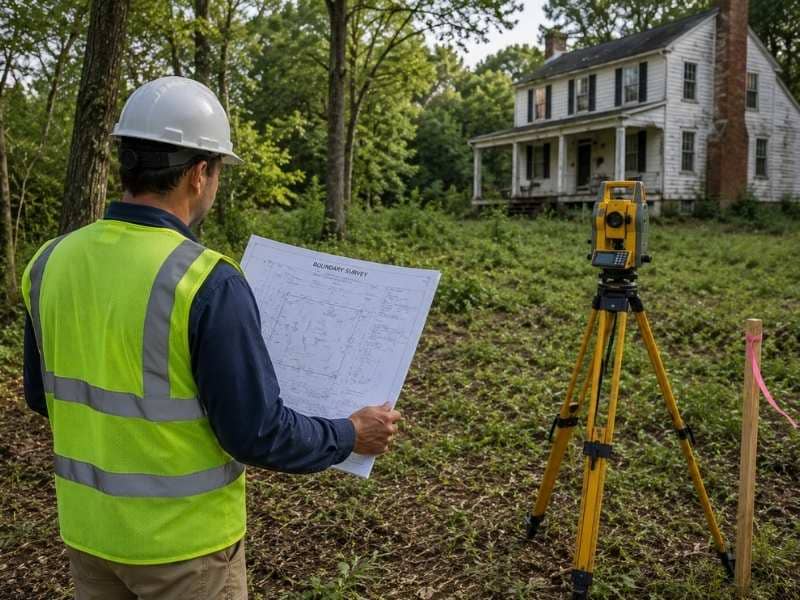
Boundary survey cost can vary from one property to another. Older properties often cost more to survey because they usually require more research and fieldwork. Older deeds, missing markers, changes made over time, and overgrown land can all make the process take longer.
More time and effort usually mean a higher survey cost.
Why Older Properties Often Cost More to Survey
Older properties have a longer history. Before fieldwork begins, a surveyor may need to review many years of deeds and records to understand how the property was originally described and whether any changes were made over time.
Properties that have changed owners many times usually require more research than newer lots with a short ownership history.
Older deeds can also be difficult to interpret. Some descriptions refer to trees, roads, or landmarks that no longer exist. Connecting those old descriptions to today’s conditions takes extra time and can increase the cost of the survey.
Missing Records and Old Deed Language Can Cause Delays
Some older properties have incomplete records. Previous surveys may not have been filed, and older plats may be difficult to find. In some cases, records may even conflict with one another.
Working through these gaps takes time.
Old deed descriptions can also create problems. A deed written many years ago may mention a road that has moved or a creek that has changed course. Surveyors often have to reconstruct these old references to determine the correct boundary.
The extra research involved can add to the total survey cost.
How Property Changes Affect a Boundary Survey
Over the years, many owners may have made changes to the property. Fences may have been moved, sheds may have been built, and driveways may have changed locations.
Surveyors must document these features when establishing the legal boundary.
The problem is that many of these changes were never recorded. A fence built decades ago may not follow the true property line. Surveyors must determine whether these features match the legal records or were simply placed based on estimates.
Sorting through years of changes takes more time and increases the cost of the survey.
Land Conditions That Can Increase Survey Costs
Older properties are often overgrown. Thick trees, brush, and weeds can block the clear lines that surveyors need to take accurate measurements.
Before measurements can be made, the survey crew may need to work around or through heavy vegetation.
Newer properties in developed neighborhoods usually have fewer obstacles. On older rural properties, however, thick growth can slow down work at every corner.
More time in the field means higher survey costs.
Ways to Help Reduce Survey Costs
Property owners can take a few simple steps to help speed up the process.
Sharing old surveys, deeds, title documents, and plat maps with the surveyor can make research easier. Even older records may provide useful information and reduce the time spent searching for documents.
If you know where old property pins or corner markers are located, tell the surveyor before work begins. Markers from surveys completed many years ago may still be in the ground.
Clearing brush and creating access paths along the property lines can also help the survey crew work more efficiently and reduce the amount of time spent in the field.
Frequently Asked Questions
Why do older properties cost more to survey?
Older properties often have longer ownership histories, older deeds, and incomplete records. Surveyors need more time to research and verify the boundary, which increases the overall cost.
Can missing markers increase the cost of a boundary survey?
Yes. If corner markers are missing, surveyors must re-establish their locations using deeds, plats, and measurements from nearby markers. This process takes more time and can increase the cost.
Do property changes affect survey costs?
Yes. Fences, sheds, driveways, and other improvements added over the years can make the survey more complicated. Surveyors must document these features and determine whether they match the legal boundary.
Can overgrown land make a survey take longer?
Yes. Thick trees and brush can block the lines needed for accurate measurements. Extra time spent working through heavy vegetation can increase the overall cost of the survey.
How can I prepare my property for a survey?
You can help by providing old deeds, surveys, title documents, and plat maps. If you know where old property markers are located, share that information with the surveyor. Clearing brush and creating access paths along the property lines can also help speed up the work.