
What Happens When a Neighbor’s Fence Crosses the Property Line?
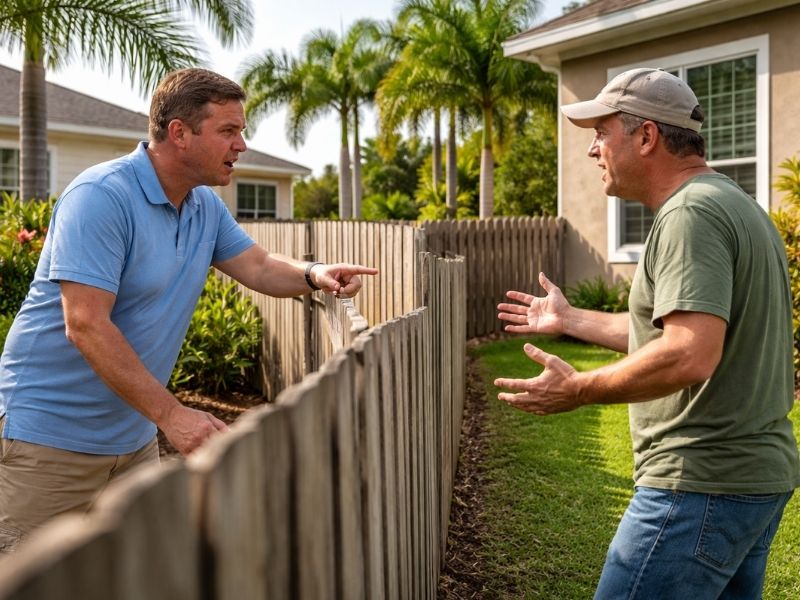
A fence that sits two feet over the property line might not seem like a big deal. Until you try to build something near it. Or sell your home. Or apply for a permit. Then it becomes a very big deal very fast. The first step in dealing with any fence encroachment is to find property lines through a licensed survey, not by guessing or relying on old assumptions. In Tampa, where neighborhoods range from newly platted subdivisions to older lots with decades of informal changes, fence disputes are more common than most homeowners expect.
Why Fences End Up in the Wrong Place
Most fence encroachments aren’t intentional. A neighbor hires a contractor. The contractor eyeballs the boundary. Nobody orders a survey. The fence goes up a few feet over the legal line, and both parties assume it’s fine because it looks right.
This happens constantly. Older Tampa neighborhoods are especially prone to it because lot lines in areas platted 50 or 60 years ago often don’t match what people assume based on how the land has been used. A fence that’s been standing for 20 years feels permanent. It rarely is, legally speaking.
Sometimes a fence gets replaced after a storm or normal wear and ends up slightly shifted from where the old one stood. The shift seems minor but changes the legal situation entirely.
What a Fence Encroachment Actually Means
When a fence sits on your side of the property line, that’s an encroachment. The neighbor’s structure is occupying land they don’t own.
This matters for several reasons.
First, it affects your usable land. Even a two-foot encroachment on a narrow Tampa lot can make a meaningful difference to what you can build or plant near that boundary.
Second, it creates a title issue. When you go to sell the property, a title search or survey may reveal the encroachment. Buyers and their lenders don’t like unresolved encroachments. It can delay or kill a sale.
Third, it may affect your permit applications. If you’re planning an addition, a pool or a new fence of your own, the permit reviewer will check the survey against your plans. A neighbor’s fence sitting inside your boundary can complicate your setback calculations and flag a problem you didn’t know existed.
How to Confirm the Fence Is Actually Over the Line
Before you do anything, confirm the facts. Don’t rely on visual estimates, old surveys or what you’ve always assumed the line to be.
The only reliable way to find property lines is to hire a licensed Florida land surveyor. The surveyor will locate the original survey monuments, research the recorded plat and place the boundary on the ground with physical markers. The resulting survey drawing will show exactly where your legal boundary sits and where the fence sits relative to it.
This documentation is what you need if the situation escalates. An opinion about where the line is carries no legal weight. A signed and sealed survey from a licensed surveyor does.
In Hillsborough County, surveyors work from recorded plat data, legal descriptions and field measurements. That combination produces an accurate boundary position that holds up in any formal process.
Your Options Once the Encroachment Is Confirmed
Once you have a survey that confirms the fence is over your line, you have several paths forward.
Talk to the Neighbor First
Start with a direct conversation. Bring the survey drawing. Show the neighbor exactly where the line is and where their fence sits. Many people genuinely don’t know their fence is in the wrong place. A calm, documented conversation with a survey in hand resolves a lot of disputes without lawyers or formal complaints.
Ask the neighbor to move the fence to the correct location. If they agree, get the agreement in writing and set a timeline. If they move the fence themselves, consider having a surveyor confirm the new position before you close out the issue.
Request a Written Encroachment Agreement
If the neighbor wants to keep the fence where it is and you’re willing to allow it, a written encroachment agreement is a cleaner solution than a handshake. This is a recorded legal document that acknowledges the fence crosses the line and defines the terms under which it’s permitted to stay.
An encroachment agreement protects both parties. It clarifies that you haven’t abandoned your rights to that strip of land and that the arrangement is temporary or conditional. A real estate attorney can draft this for you.
File a Complaint or Seek Legal Remedies
If the neighbor refuses to move the fence and you’re not willing to allow the encroachment, your options become more formal.
In Florida, a property owner can pursue a legal action to require removal of an encroaching structure. This typically involves a real estate attorney and may proceed through the courts if the neighbor doesn’t comply voluntarily. The survey serves as the primary evidence of where the boundary sits.
Tampa also has code enforcement processes that may apply depending on the specific situation. Code enforcement generally addresses permit violations, but if the fence violates setback requirements on its own lot, that may be an avenue worth exploring with the city.
The Risk of Doing Nothing
Ignoring a fence encroachment is a risk. In Florida, adverse possession laws allow someone who has openly occupied and maintained a piece of land for at least seven years to potentially claim legal ownership of it under certain conditions. The requirements are strict and the process is not simple, but the risk exists on long-standing encroachments.
Even if adverse possession never comes up, an unresolved encroachment will surface when you try to sell the property. Title companies and lenders require the issue to be addressed before closing. Resolving it then, under time pressure, is far more stressful and expensive than addressing it now.
Frequently Asked Questions
How Do I Find Property Lines to Confirm a Fence Encroachment?
Hire a licensed land surveyor. The surveyor locates the original survey monuments, researches the recorded plat, and places the legal boundary on the ground. The signed survey drawing shows exactly where your property line is and where the fence sits in relation to it.
Can a Neighbor Be Forced to Move a Fence That Crosses My Property Line?
Yes. In Florida, property owners have the legal right to require the removal of a structure that encroaches on their land. If the neighbor refuses to cooperate, a real estate attorney can pursue legal action. A licensed survey is usually the key piece of evidence.
What Is an Encroachment Agreement and When Does It Make Sense?
An encroachment agreement is a recorded legal document that recognizes a structure crossing a property line and sets the conditions under which it may remain. It can be a good option when both parties agree to keep the fence in place and want to avoid future disputes.
Does a Fence Encroachment Affect a Home Sale?
Yes. Surveys and title searches performed during a sale can uncover an encroachment. Buyers and lenders often want the issue resolved before closing. A fence dispute can delay or even stop a sale, which is why it is easier to address the problem before listing the property.
Can a Long-Standing Fence Encroachment Become a Legal Property Line?
Florida law allows adverse possession claims under certain conditions. Someone who openly occupies another person’s land for at least seven years may be able to claim ownership if strict legal requirements are met. It is not automatic, but long-standing encroachments that go unresolved can create legal risks.