
Can an Old Property Survey Affect Property Survey Cost Today?
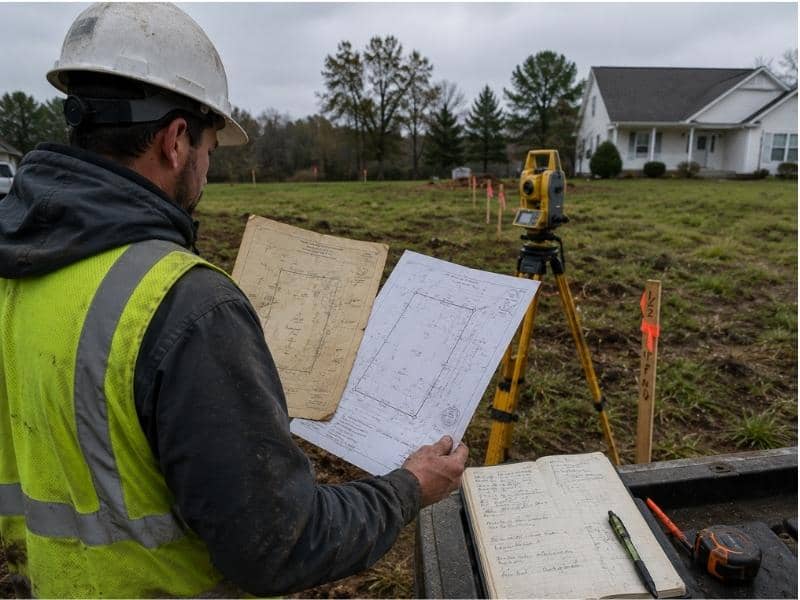
Property survey cost depends on many things, and one of them is whether an old survey already exists for the property. When a homeowner has an older survey on file, it may give the surveyor a head start on research. That head start can save time, and time saved can affect the final cost. But not every old survey helps. Some are too outdated to be useful, and others may actually create more work if the records no longer match conditions on the ground.
Can an Old Survey Help Lower Property Survey Cost?
An old survey gives a new surveyor something to start from. It shows the boundary lines, corner marker locations, and site features that existed when the survey was done. If those records are still accurate and the corner markers are still in place, the surveyor spends less time on research and fieldwork to confirm what is already documented.
Less research time and faster fieldwork can reduce property survey cost. A surveyor who finds solid prior records may not need to pull as many documents or spend as much time tracking down boundary evidence. That savings does not always show up in a lower quote, since other factors also affect pricing, but having a usable old survey on file is generally better than starting from nothing.
Signs That an Old Survey May No Longer Be Useful
An old survey loses its value when the property no longer matches what the document shows. New structures built after the survey date, fences moved or added, and changes to driveways or site features all create gaps between the old drawing and current conditions. When those gaps are large, the surveyor has to collect new data to fill them in, which adds time and cost.
Missing corner markers are another sign that an old survey may not help much. If the markers shown on the old drawing are gone from the ground, the surveyor has to find or replace them using other methods. That process takes more time than simply confirming a marker that is already in place. The older the survey and the more the property has changed, the less the old document can reduce the work involved in a new one.
Why Surveyors Still Check Old Survey Records
Even when an old survey is outdated, surveyors still look at it. An old survey shows what the boundary was understood to be at a past point in time. That context helps the surveyor understand the history of the property and spot anything that may have changed or shifted over the years.
Checking old records is part of doing the job correctly, not a shortcut. A surveyor does not copy an old survey and hand it back as a new one. They use it as one piece of evidence alongside deeds, plats, and physical markers on the ground. When the old survey matches current conditions, it speeds things up. When it does not, it still provides a useful background that helps the surveyor understand the full picture before making any decisions about the boundary.
Other Things That Can Affect Property Survey Cost
The age of an existing survey is just one factor. Property size plays a big role too. A larger lot takes more time to measure than a smaller one, which raises the cost. Lot shape also matters. A simple rectangular lot is faster to survey than one with many corners, curves, or irregular edges that require more measurements to document accurately.
The type of survey needed affects cost as well. A basic boundary survey costs less than a full plat of survey that documents all existing site features and gets recorded with a local office. Heavily wooded lots, lots with limited access, and properties near water or other difficult terrain also tend to cost more because fieldwork takes longer. Property survey cost reflects the total amount of time and work the job requires, not just one single factor.
How to Get Ready for a New Survey
Homeowners can help the process go more smoothly by gathering any property documents they already have before the surveyor starts work. Old surveys, deeds, plat maps, and title documents all give the surveyor useful background on the property. Even an old survey that is no longer fully accurate can help by showing what the boundary looked like in the past.
Knowing where existing property corner markers are located is also helpful. If a homeowner can point out stakes, iron pins, or concrete monuments at the corners of the lot, the surveyor can confirm them faster than searching from scratch. Sharing any documents or information about recent changes to the property, such as new fences or additions, also helps the surveyor understand what to look for when they arrive on site.
Frequently Asked Questions
How old is too old for a property survey?
There is no set age that makes a survey automatically too old to use. What matters is whether the property has changed since the survey was done and whether the corner markers it shows are still in place. A survey from twenty years ago may still be useful if nothing on the property has changed. A survey from five years ago may already be outdated if major improvements were made after it was completed.
Can changes to my property increase the cost of a survey?
Yes. Additions, new fences, outbuildings, and other changes made after the last survey mean the surveyor has to document more than the old records show. That extra work adds time, and more time generally means a higher cost. The more the current property differs from the old survey, the more new fieldwork the surveyor has to do.
Will a missing property marker affect the survey process?
Yes. When a corner marker shown on an old survey is no longer on the ground, the surveyor has to locate or re-establish it using deed records, plat data, and measurements from other markers. That takes more time than confirming a marker that is already in place, which can add to the overall cost and time needed to complete the survey.
Can I give my surveyor a copy of an old survey?
Yes, and it is a good idea to do so. An old survey gives the surveyor background on the property’s boundary history and the location of prior corner markers. Even if the old survey is outdated, it still helps the surveyor understand what the property looked like at a past point in time, which is useful context for the new work.
Does every property need a new survey?
Not always. Whether a new survey is needed depends on the purpose and whether older records are still accurate. If a homeowner needs a survey for a specific project, permit, or transaction, the requirements of that process usually determine whether a new one is needed. A licensed surveyor can review the existing documents and advise whether they are sufficient or whether new fieldwork is required.